Listen to this article in summarized format
×
Subscribe to 
Unlock AI Briefing and Premium Content
New Year Offer 24 Hours Left
Subscribe NowAlready a member? Sign In
What's Included
- Exclusive Stories
- Daily ePaper Access
- Smart Market Tools
- Curated Investment Ideas
- Ad-lite Experience
Subscription

 Agencies
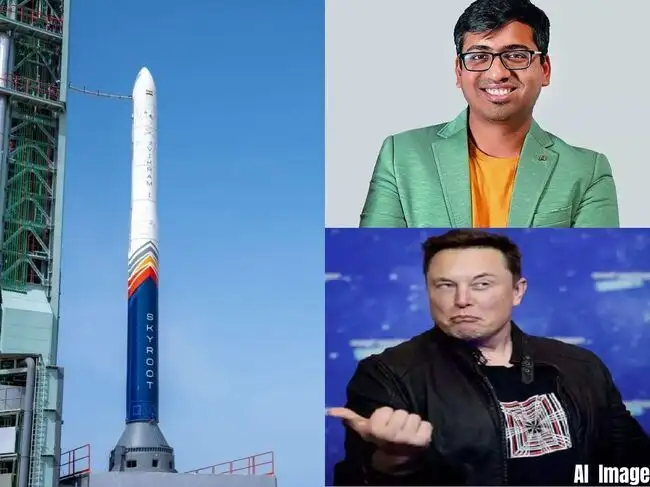
Skyroot Aerospace's Vikram-1 was launched successfully on Saturday from the First Launch Pad of the Satish Dhawan Space Centre in Sriharikota, making it India's first privately developed rocket to reach orbit. The rocket cleared the launch tower cleanly, climbed through its planned trajectory, and completed payload separation, deploying satellites for both Indian and foreign customers. The mission, called "Aagaman," was Hyderabad-based Skyroot's very first attempt at an orbital launch, and it worked on the first try.
Also read: Pawan Kumar Chandana: Meet India's Elon Musk, the Skyroot CEO who once scored 50 in maths and is now sending Vikram-1 into space
That last detail is the one worth pausing on. Getting a private rocket to orbit on the first attempt is rare in the history of spaceflight. Even SpaceX, the global private leader in space launch technology, needed three failed launches before it finally succeeded with its Falcon 1 rocket in 2008. Pawan Kumar Chandana and his team appear to have skipped that painful chapter entirely.
Skyroot did not need a fourth attempt. Or a third. Or a second.
(You can now subscribe to our Economic Times WhatsApp channel)
Also read: Pawan Kumar Chandana: Meet India's Elon Musk, the Skyroot CEO who once scored 50 in maths and is now sending Vikram-1 into space
That last detail is the one worth pausing on. Getting a private rocket to orbit on the first attempt is rare in the history of spaceflight. Even SpaceX, the global private leader in space launch technology, needed three failed launches before it finally succeeded with its Falcon 1 rocket in 2008. Pawan Kumar Chandana and his team appear to have skipped that painful chapter entirely.
Skyroot Vikram-1 Launch: What Happened On The Launch Pad Today
Vikram-1 is a four-stage rocket built with an all-carbon composite structure, powered by three solid-fuel stages and a liquid-fuelled orbital adjustment module for the final push into orbit. It is designed to carry payloads of up to 350 kilograms into a 450-kilometre low earth orbit. Along with the satellites, the rocket carried a handwritten postcard from Prime Minister Narendra Modi reading "Vande Mataram," plus notes from Skyroot's own team, investors, and supporters. Ahead of the launch, the Prime Minister called the mission a historic new frontier for India's space journey.Skyroot vs SpaceX: Three Strikes For Musk, One Swing For Pawan Kumar Chandana
Elon Musk's SpaceX did not get its rocket to orbit easily. Its Falcon 1 rocket failed on its first attempt in March 2006, when a fuel leak caused a fire less than a minute after liftoff. The second attempt, in March 2007, made it further but lost control after a stage-separation problem and never reached orbit. The third attempt, in August 2008, failed the same way, a stage collision during separation. By then, SpaceX was nearly out of money, and Musk had poured most of his personal fortune into keeping the company alive. Only the fourth attempt, in September 2008, finally succeeded, making Falcon 1 the first privately built, liquid-fuelled rocket to reach orbit.
Skyroot did not need a fourth attempt. Or a third. Or a second.
Why First-Try Success Is So Rare
Orbital rockets are unforgiving machines. A single loose valve, a mistimed engine cutoff, or a stage that separates a second too early can end a mission in seconds. That is why most new rocket programmes, private or government-run, expect to fail at least once before they succeed. Rocket Lab, the New Zealand-based company often named alongside SpaceX and Skyroot, also needed a second attempt before its Electron rocket reached orbit. Chandana's team appears to have avoided that entire learning curve in public, though the company has said the mission will still be studied closely for improvements before regular commercial flights begin.The Man Who Once Failed Maths, Now Outdoing Musk's Track Record
Chandana, who scored just 51 marks in mathematics as a school student, spent nearly six years as an ISRO scientist before quitting in 2018 to start Skyroot with fellow ISRO engineer Naga Bharath Daka. The company built India's first privately tested rocket engine in 2020, flew India's first private suborbital rocket in 2022, and is now valued at around $1.1 billion after a $60 million funding round in May 2026. Today's launch adds a new line to that record: doing on the first try what took the world's most famous rocket company three failures to achieve.What Comes Next for Skyroot
Skyroot has said Vikram-1's maiden flight is the first of several development launches, and that data from Saturday's mission will help refine the rocket before it enters regular commercial service. If the company keeps this pace, it could soon be offering dedicated, on-demand satellite launches in a global market currently dominated by just a handful of players, SpaceX and Rocket Lab among them. For a company that got its orbital debut right on the first attempt, the comparison to Musk's shaky start may not last long, Skyroot may soon be setting the benchmark rather than chasing it.Add  as a Reliable and Trusted News Source
as a Reliable and Trusted News Source Add Now!
 (You can now subscribe to our Economic Times WhatsApp channel)