 Agencies
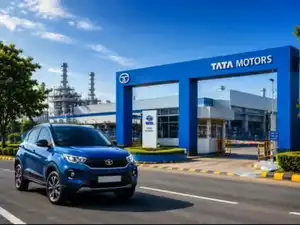
Homegrown auto major Tata Motors raised concerns over the government's proposal to allow carmakers to buy cheaper credits directly from Bureau of Energy Efficiency (BEE) in the draft amendment to the CAFE II notification, stating that it would make the regulator a “counterparty” in the system.
BEE had in its draft proposal issued earlier this month said carmakers not meeting CAFE norms can purchase credits from it at a lower price than the penalty proposed by the regulator. Tata Motors Passenger Vehicles has said this could distort price discovery and devalue credits earned by manufacturers who genuinely exceeded efficiency targets, as per sources.
In a letter to the Ministry of Power (MoP) dated July 14, the company urged that the government must not let the BEE 'originate or sell credits' in its own capacity. If credits are available from BEE at Rs 2,500 per g CO2/km in unlimited quantities, an OEM can make a straightforward commercial calculation. If the cost of modifying products, improving fuel efficiency, changing technology or otherwise achieving compliance is higher than Rs 2,500 per g CO2/km, it becomes cheaper to buy the credit than to comply, the company is understood to have said in the letter.
"This provision effectively provides a compliance option to an OEM at a cost lower than the statutory penalty which is approximately Rs 5,000 per g CO2/km under the Energy Conservation Act, 2001," a source said citing the letter.
The company has held that if credits can be created by BEE merely against payment, without any corresponding improvement in emission, such credits would not have the same character as those generated by automakers competing with and exceeding CAFE standards. The credits generated by BEE would effectively be accounting entries used to extinguish debits arising as a result of non-compliance. “They would not represent any environmental or fuel efficiency gain… that would dilute the integrity of the CAFE framework," the company is learnt to have said.
Tata Motors said that BEE should instead act as a neutral administrator, verifier and facilitator of the credit-debit mechanism and that "BEE should administer the market, not sell into it".
CAFE norms mandate automakers to produce more fuel-efficient and lower-emitting vehicles.
The company said that credits should arise only from verified over-compliance by carmakers, calculated in accordance with the notified methodology and duly recorded in the passbook. “If BEE itself supplies credits, it would become, at the same time, the regulator, the market administrator, the price-setter and a counterparty in the very market that it supervises. Even if unintended, such a structure may affect price discovery, depress the value of genuine manufacturer-generated credits, and create uncertainty about the neutrality of the market architecture," Tata Motors is learnt to have said in its letter.
The company also pointed out that "credits earned through verified over-compliance should not lapse merely because they are not purchased within the FY2022-23 to FY2026-27 compliance block". Credits earned through verified over-compliance should be capable of carry-forward into subsequent compliance blocks, subject to safeguards, it requested.
(You can now subscribe to our Economic Times WhatsApp channel)
BEE had in its draft proposal issued earlier this month said carmakers not meeting CAFE norms can purchase credits from it at a lower price than the penalty proposed by the regulator. Tata Motors Passenger Vehicles has said this could distort price discovery and devalue credits earned by manufacturers who genuinely exceeded efficiency targets, as per sources.
In a letter to the Ministry of Power (MoP) dated July 14, the company urged that the government must not let the BEE 'originate or sell credits' in its own capacity. If credits are available from BEE at Rs 2,500 per g CO2/km in unlimited quantities, an OEM can make a straightforward commercial calculation. If the cost of modifying products, improving fuel efficiency, changing technology or otherwise achieving compliance is higher than Rs 2,500 per g CO2/km, it becomes cheaper to buy the credit than to comply, the company is understood to have said in the letter.
"This provision effectively provides a compliance option to an OEM at a cost lower than the statutory penalty which is approximately Rs 5,000 per g CO2/km under the Energy Conservation Act, 2001," a source said citing the letter.
The company has held that if credits can be created by BEE merely against payment, without any corresponding improvement in emission, such credits would not have the same character as those generated by automakers competing with and exceeding CAFE standards. The credits generated by BEE would effectively be accounting entries used to extinguish debits arising as a result of non-compliance. “They would not represent any environmental or fuel efficiency gain… that would dilute the integrity of the CAFE framework," the company is learnt to have said.

Tata Motors said that BEE should instead act as a neutral administrator, verifier and facilitator of the credit-debit mechanism and that "BEE should administer the market, not sell into it".
CAFE norms mandate automakers to produce more fuel-efficient and lower-emitting vehicles.
The company said that credits should arise only from verified over-compliance by carmakers, calculated in accordance with the notified methodology and duly recorded in the passbook. “If BEE itself supplies credits, it would become, at the same time, the regulator, the market administrator, the price-setter and a counterparty in the very market that it supervises. Even if unintended, such a structure may affect price discovery, depress the value of genuine manufacturer-generated credits, and create uncertainty about the neutrality of the market architecture," Tata Motors is learnt to have said in its letter.
The company also pointed out that "credits earned through verified over-compliance should not lapse merely because they are not purchased within the FY2022-23 to FY2026-27 compliance block". Credits earned through verified over-compliance should be capable of carry-forward into subsequent compliance blocks, subject to safeguards, it requested.
Add  as a Reliable and Trusted News Source
as a Reliable and Trusted News Source Add Now!
 (You can now subscribe to our Economic Times WhatsApp channel)
(Catch all the Business News, Breaking News and Latest News Updates on The Economic Times.)
Subscribe to The Economic Times Prime and read the ET ePaper online.
Read More News on
(Catch all the Business News, Breaking News and Latest News Updates on The Economic Times.)
Subscribe to The Economic Times Prime and read the ET ePaper online.