Listen to this article in summarized format
×
Subscribe to 
Unlock AI Briefing and Premium Content
New Year Offer 24 Hours Left
Subscribe NowAlready a member? Sign In
What's Included
- Exclusive Stories
- Daily ePaper Access
- Smart Market Tools
- Curated Investment Ideas
- Ad-lite Experience
Subscription

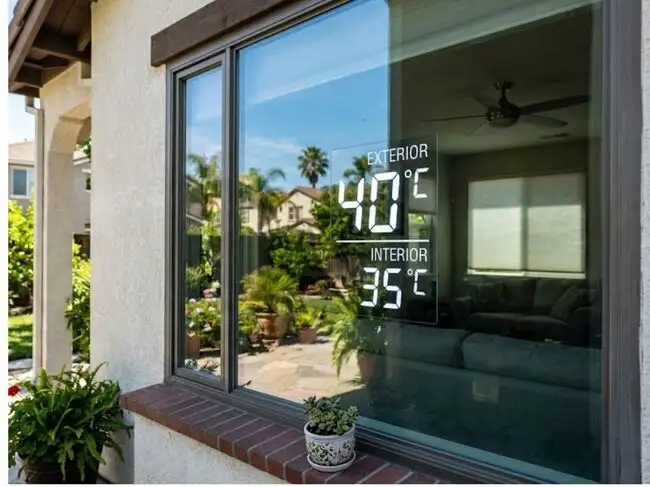
Scientists are developing transparent cooling technologies that could help reduce indoor temperatures without relying on air conditioners, as per a TOI report. Unlike most passive cooling materials, which are opaque and unsuitable for windows, the new glass-based technologies are designed to reflect unwanted solar heat while allowing excess indoor warmth to escape, potentially lowering building temperatures without consuming electricity.
The coating also addresses a limitation found in many earlier passive cooling materials that continue cooling after sunset, sometimes causing surfaces to become excessively cold. To overcome this, researchers incorporated a phase-change material that stores heat during the day and gradually releases it at night, helping maintain more stable temperatures.
During outdoor testing, the coating delivered an average daytime cooling effect of 4.8°C below the ambient temperature while remaining only 0.6°C cooler than the surrounding air at night, reducing the risk of overcooling.
The researchers also reported strong durability. Solar reflectivity declined by only 0.6 per cent after 336 hours of ultraviolet exposure and by just 1 per cent following a month of outdoor ageing.
Although scientists have studied this concept for years, producing transparent materials suitable for windows has remained challenging because high-performance radiative cooling coatings typically appear white or opaque as they scatter visible light along with solar heat.
Research published in Nano Letters has recently demonstrated a transparent directional thermal emitter that allows visible light to pass through while reducing window glass temperatures by as much as 4.8°C compared with conventional glass under real-world summer conditions, as reported by TOI. According to the researchers, such designs could reduce cooling demand in buildings located in hot climates by allowing heat to escape without blocking natural daylight.
Researchers say long-term durability will be essential because window coatings must withstand years of exposure to sunlight, dust, rain and changing weather without losing effectiveness.
Although further testing is required before the technology can be introduced into commercial buildings, the latest advances indicate that future windows could play a greater role in reducing dependence on air conditioning. In addition to allowing natural light into buildings, they could help lower energy consumption and improve indoor comfort without using electricity.
(With inputs from TOI)
(You can now subscribe to our Economic Times WhatsApp channel)
New coating combines cooling performance with durability
A study published in Advanced Functional Materials describes a passive radiative cooling coating that remains effective even after prolonged exposure to sunlight, dirt and outdoor weather. According to the researchers, the material combines high solar reflectance with strong infrared emission, enabling it to reject incoming heat during the day while releasing stored heat more efficiently.The coating also addresses a limitation found in many earlier passive cooling materials that continue cooling after sunset, sometimes causing surfaces to become excessively cold. To overcome this, researchers incorporated a phase-change material that stores heat during the day and gradually releases it at night, helping maintain more stable temperatures.
During outdoor testing, the coating delivered an average daytime cooling effect of 4.8°C below the ambient temperature while remaining only 0.6°C cooler than the surrounding air at night, reducing the risk of overcooling.
The researchers also reported strong durability. Solar reflectivity declined by only 0.6 per cent after 336 hours of ultraviolet exposure and by just 1 per cent following a month of outdoor ageing.

How transparent cooling windows work
Passive radiative cooling works by reflecting a large portion of the Sun's incoming energy while emitting thermal radiation through the atmospheric window, a range of infrared wavelengths that can pass through Earth's atmosphere and dissipate into outer space. Unlike conventional cooling systems, the process does not require electricity.Although scientists have studied this concept for years, producing transparent materials suitable for windows has remained challenging because high-performance radiative cooling coatings typically appear white or opaque as they scatter visible light along with solar heat.
Research published in Nano Letters has recently demonstrated a transparent directional thermal emitter that allows visible light to pass through while reducing window glass temperatures by as much as 4.8°C compared with conventional glass under real-world summer conditions, as reported by TOI. According to the researchers, such designs could reduce cooling demand in buildings located in hot climates by allowing heat to escape without blocking natural daylight.
Potential role in future buildings
While the technologies remain at the research stage, they address several challenges that have limited the adoption of passive cooling materials, including weather resistance, ultraviolet degradation, nighttime temperature control and transparency.Researchers say long-term durability will be essential because window coatings must withstand years of exposure to sunlight, dust, rain and changing weather without losing effectiveness.
Although further testing is required before the technology can be introduced into commercial buildings, the latest advances indicate that future windows could play a greater role in reducing dependence on air conditioning. In addition to allowing natural light into buildings, they could help lower energy consumption and improve indoor comfort without using electricity.
(With inputs from TOI)
Add  as a Reliable and Trusted News Source
as a Reliable and Trusted News Source Add Now!
 (You can now subscribe to our Economic Times WhatsApp channel)