Listen to this article in summarized format
×
Subscribe to 
Unlock AI Briefing and Premium Content
New Year Offer 24 Hours Left
Subscribe NowAlready a member? Sign In
What's Included
- Exclusive Stories
- Daily ePaper Access
- Smart Market Tools
- Curated Investment Ideas
- Ad-lite Experience
Subscription

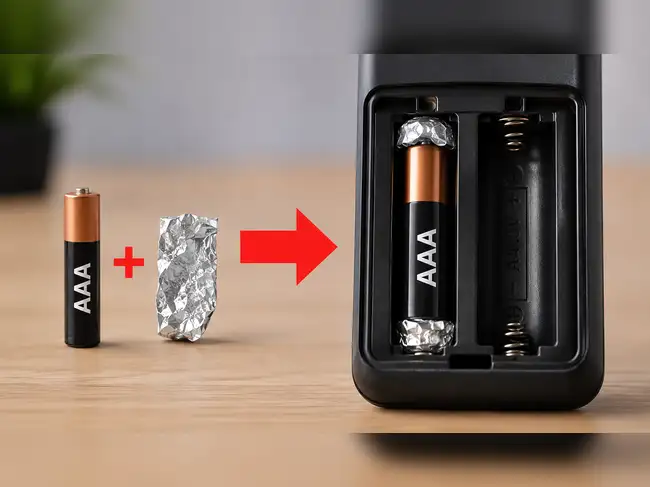
A dead remote and no AA batteries left? Many people turn to a surprisingly simple fix: using a small piece of aluminum foil to help a AAA battery fit into a AA slot.
A TV remote suddenly stops responding. Your flashlight flickers even with fresh batteries. A game controller works only if you squeeze the battery compartment shut. In many American households, the quick fix is surprisingly simple: fold a tiny piece of aluminum foil, tuck it behind the AA battery, and restore the connection. It's a trick that's been shared for decades because it's cheap, easy, and often works instantly.
But is it actually safe? Could aluminum foil slowly corrode battery contacts, damage your electronics, or even create a fire hazard?
Using aluminum foil to fit a AAA battery into a AA slot is a remarkably effective pinch-fix, because both batteries share the exact same 1. 5V chemistry—the only real differences are physical size and capacity. The golden rule for keeping this trick entirely safe is all about precise placement: you should only use a small, tightly packed wad of foil at the flat negative (–) terminal to bridge the gap to the device's spring contact.
The genuine safety hazard here isn't slow-moving galvanic corrosion (which, at worst, just causes a bit of annoying oxidation over several weeks); it’s the risk of a sloppy, loose wrap accidentally bridging the positive and negative poles at the same time. Doing that creates a direct short circuit that can rapidly overheat the cell, so keeping the foil strictly contained to the negative terminal keeps the workaround perfectly safe.
Just keep in mind that this is strictly a short-term solution for low-drain indoor gadgets like TV remotes or wall clocks. Because a AAA battery holds only about a third of the energy capacity of a standard AA, your device is going to drain that makeshift slot incredibly fast—so don't be surprised when it peters out way sooner than expected.
It is a fantastic MacGyver move to get you through an evening, but for anything high-drain, high-humidity, or safety-critical (like a smoke detector), skip the foil hack and just go buy the correct battery size.
Even though AA batteries follow international size standards, small manufacturing tolerances mean not every battery measures exactly the same length. A fraction of a millimeter can sometimes be enough to interrupt power in older remotes, wireless keyboards, children's toys, LED flashlights, clocks, or gaming controllers.
When electricity cannot flow consistently, the device may randomly shut off, restart, or fail to power on altogether. That's why many people reach for aluminum foil as a temporary spacer. Because aluminum conducts electricity extremely well, it fills the gap and restores the electrical path almost immediately.
For low-drain electronics, this simple repair often works surprisingly well. However, conductivity is only one part of the story.
Fortunately, galvanic corrosion doesn't happen simply because two metals touch. Water, condensation, or high humidity usually has to be present for the electrochemical reaction to develop.
That's why a remote control sitting in a climate-controlled living room is far less likely to experience corrosion than a flashlight stored in a damp garage, a marine emergency radio kept on a boat, or outdoor equipment exposed to changing weather conditions.
If corrosion does begin, the aluminum foil typically oxidizes first because it is the less corrosion-resistant metal. Instead of destroying the battery contacts, the foil itself gradually develops a dull oxide layer that reduces conductivity. Replacing the foil generally restores the electrical connection, although prolonged exposure to moisture can eventually leave residue that should be cleaned from the contacts.
For most indoor household electronics, corrosion from a temporary foil shim develops slowly—if it develops at all—making environmental conditions the biggest factor rather than the presence of aluminum alone.
Galvanic corrosion depends primarily on the combination of metals and the presence of moisture, not the battery's electrical polarity. Whether the foil touches the positive or negative terminal, aluminum remains in contact with nickel-plated metal, so the basic chemistry stays the same.
Mechanically, however, placement can affect how well the repair works. Many people find that placing the folded foil against the flat negative terminal helps keep the spacer from shifting inside the battery compartment. A stable connection reduces intermittent power loss and lowers the chance of the foil moving out of place.
The important rule is making sure the foil touches only one battery terminal. If it accidentally bridges two contacts or touches exposed metal elsewhere inside the compartment, it can create a short circuit.
The greater risk comes from improper installation. If the foil accidentally connects the positive and negative terminals, electrical current can flow uncontrollably. That may generate heat, rapidly drain the batteries, and in rare situations cause batteries to leak or vent.
Another long-term issue is oxidation. Aluminum naturally forms a thin oxide coating when exposed to air. While this protective layer slows further corrosion, it also reduces electrical conductivity. If your remote or flashlight begins working only intermittently after months of using a foil shim, oxidation on the spacer may be the reason.
Replacing the foil usually restores performance temporarily, but repeated problems often indicate that the battery compartment itself needs repair.
These parts are designed to resist wear and reduce the likelihood of oxidation over time. It's also worth trying a different battery brand. While all AA batteries must meet standardized dimensions, slight manufacturing tolerances can make one brand fit better than another in an older device.
(You can now subscribe to our Economic Times WhatsApp channel)
But is it actually safe? Could aluminum foil slowly corrode battery contacts, damage your electronics, or even create a fire hazard?
Using aluminum foil to fit a AAA battery into a AA slot is a remarkably effective pinch-fix, because both batteries share the exact same 1. 5V chemistry—the only real differences are physical size and capacity. The golden rule for keeping this trick entirely safe is all about precise placement: you should only use a small, tightly packed wad of foil at the flat negative (–) terminal to bridge the gap to the device's spring contact.
The genuine safety hazard here isn't slow-moving galvanic corrosion (which, at worst, just causes a bit of annoying oxidation over several weeks); it’s the risk of a sloppy, loose wrap accidentally bridging the positive and negative poles at the same time. Doing that creates a direct short circuit that can rapidly overheat the cell, so keeping the foil strictly contained to the negative terminal keeps the workaround perfectly safe.
Just keep in mind that this is strictly a short-term solution for low-drain indoor gadgets like TV remotes or wall clocks. Because a AAA battery holds only about a third of the energy capacity of a standard AA, your device is going to drain that makeshift slot incredibly fast—so don't be surprised when it peters out way sooner than expected.

It is a fantastic MacGyver move to get you through an evening, but for anything high-drain, high-humidity, or safety-critical (like a smoke detector), skip the foil hack and just go buy the correct battery size.
Why do loose AA batteries cause so many everyday problems?
Battery-powered devices are designed with spring-loaded contacts that keep constant pressure on the battery terminals. After years of use, these springs can weaken, battery compartments can wear slightly, or replacement batteries may vary just enough in size to create an unreliable connection.Even though AA batteries follow international size standards, small manufacturing tolerances mean not every battery measures exactly the same length. A fraction of a millimeter can sometimes be enough to interrupt power in older remotes, wireless keyboards, children's toys, LED flashlights, clocks, or gaming controllers.
When electricity cannot flow consistently, the device may randomly shut off, restart, or fail to power on altogether. That's why many people reach for aluminum foil as a temporary spacer. Because aluminum conducts electricity extremely well, it fills the gap and restores the electrical path almost immediately.
For low-drain electronics, this simple repair often works surprisingly well. However, conductivity is only one part of the story.
Can aluminum foil cause corrosion inside your device?
The concern most people have is galvanic corrosion, a process that occurs when two different metals remain in contact while moisture acts as an electrolyte. Most modern battery compartments use nickel-plated steel contacts because nickel resists rust and everyday wear. Aluminum is much more chemically active.Fortunately, galvanic corrosion doesn't happen simply because two metals touch. Water, condensation, or high humidity usually has to be present for the electrochemical reaction to develop.
That's why a remote control sitting in a climate-controlled living room is far less likely to experience corrosion than a flashlight stored in a damp garage, a marine emergency radio kept on a boat, or outdoor equipment exposed to changing weather conditions.
If corrosion does begin, the aluminum foil typically oxidizes first because it is the less corrosion-resistant metal. Instead of destroying the battery contacts, the foil itself gradually develops a dull oxide layer that reduces conductivity. Replacing the foil generally restores the electrical connection, although prolonged exposure to moisture can eventually leave residue that should be cleaned from the contacts.
For most indoor household electronics, corrosion from a temporary foil shim develops slowly—if it develops at all—making environmental conditions the biggest factor rather than the presence of aluminum alone.
Does it matter whether the foil goes on the positive or negative battery terminal?
Many DIY users debate whether aluminum foil should be placed on the positive button or the flat negative end of a battery. From a corrosion standpoint, there is very little difference.Galvanic corrosion depends primarily on the combination of metals and the presence of moisture, not the battery's electrical polarity. Whether the foil touches the positive or negative terminal, aluminum remains in contact with nickel-plated metal, so the basic chemistry stays the same.
Mechanically, however, placement can affect how well the repair works. Many people find that placing the folded foil against the flat negative terminal helps keep the spacer from shifting inside the battery compartment. A stable connection reduces intermittent power loss and lowers the chance of the foil moving out of place.
The important rule is making sure the foil touches only one battery terminal. If it accidentally bridges two contacts or touches exposed metal elsewhere inside the compartment, it can create a short circuit.
Is there any real safety risk from using aluminum foil?
A correctly placed foil spacer does not increase battery voltage or change how an alkaline AA battery operates. Simply adding aluminum foil will not cause a battery to explode under normal conditions.The greater risk comes from improper installation. If the foil accidentally connects the positive and negative terminals, electrical current can flow uncontrollably. That may generate heat, rapidly drain the batteries, and in rare situations cause batteries to leak or vent.
Another long-term issue is oxidation. Aluminum naturally forms a thin oxide coating when exposed to air. While this protective layer slows further corrosion, it also reduces electrical conductivity. If your remote or flashlight begins working only intermittently after months of using a foil shim, oxidation on the spacer may be the reason.
Replacing the foil usually restores performance temporarily, but repeated problems often indicate that the battery compartment itself needs repair.
What's the best long-term solution for loose battery contacts?
Although aluminum foil is a practical emergency fix, it should not be viewed as a permanent repair for frequently used electronics. Replacing weakened battery springs, installing new battery contacts, or using commercially made conductive battery spacers provides a more reliable electrical connection.These parts are designed to resist wear and reduce the likelihood of oxidation over time. It's also worth trying a different battery brand. While all AA batteries must meet standardized dimensions, slight manufacturing tolerances can make one brand fit better than another in an older device.
Add  as a Reliable and Trusted News Source
as a Reliable and Trusted News Source Add Now!
 (You can now subscribe to our Economic Times WhatsApp channel)
(Catch all the US News, UK News, Canada News, International Breaking News Events, and Latest News Updates on The Economic Times.)
Download The Economic Times News App to get Daily International News Updates.
Read More News on
(Catch all the US News, UK News, Canada News, International Breaking News Events, and Latest News Updates on The Economic Times.)
Download The Economic Times News App to get Daily International News Updates.