Listen to this article in summarized format
×
Subscribe to 
Unlock AI Briefing and Premium Content
New Year Offer 24 Hours Left
Subscribe NowAlready a member? Sign In
What's Included
- Exclusive Stories
- Daily ePaper Access
- Smart Market Tools
- Curated Investment Ideas
- Ad-lite Experience
Subscription

 ET Online
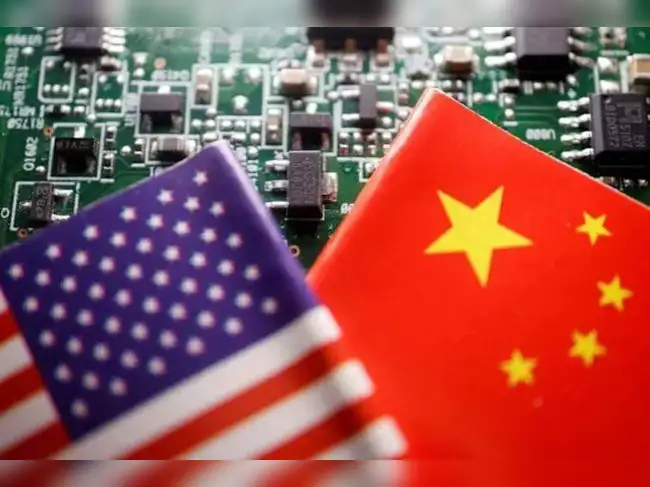
The race between the United States and China is no longer just about trade. It has evolved into a high-stakes technology battle, with artificial intelligence (AI), semiconductor chips and computing infrastructure emerging as the biggest flashpoints.
From export controls on advanced chips to billions of dollars in AI investments, both countries are trying to secure technological leadership that could shape the global economy, military capabilities and digital infrastructure for decades to come.
Also Read: US official says Nvidia has begun shipping powerful H200 AI chips to China
What is the US-China tech rivalry?
The US-China tech rivalry refers to the growing competition between the world's two largest economies to dominate critical technologies such as artificial intelligence, semiconductors, quantum computing and advanced manufacturing.
The US has traditionally led in AI software, frontier large language models (LLMs) and advanced chip design, while China has built an edge in robotics, manufacturing and large-scale industrial deployment. But as AI becomes central to economic growth and national security, both countries are investing heavily across the entire technology stack.
The competition has intensified in recent years, with Washington framing AI leadership as a strategic priority while Beijing continues to pour state support into domestic technology companies.
Why are AI and semiconductor chips at the centre of the competition?
Artificial intelligence relies on enormous computing power, making advanced semiconductor chips one of the world's most valuable strategic assets.
These chips are essential for training and running AI models used in everything from chatbots and autonomous vehicles to defence systems and scientific research.
The US currently enjoys an advantage because companies like Nvidia dominate the market for AI accelerators powering frontier models such as ChatGPT and Claude. However, China has responded by developing more efficient AI models like DeepSeek while accelerating domestic chip development despite restrictions.
Beyond chips, AI leadership also depends on data centres, electricity, cloud infrastructure and access to skilled researchers. According to Al Jazeera, China's abundant power supply and rapid renewable energy expansion have become a major advantage as AI infrastructure becomes increasingly energy-intensive.
How export controls have intensified the AI chip war
One of Washington's biggest tools has been export controls aimed at limiting China's access to advanced AI hardware.
The US has restricted exports of high-end AI chips and semiconductor manufacturing equipment to China while also working with allies to tighten controls on critical technologies. According to the BBC, the restrictions extend beyond American companies by leveraging global supply chains that depend on US technology.
More recently, the US also tightened access to some of Anthropic's most advanced AI models over national security concerns, highlighting that the rivalry now extends beyond hardware to frontier AI software, according to Wired.
Also Read: US panic is missing the point on Chinese AI
Critics argue these measures have accelerated China's push toward technological self-reliance. DeepSeek's emergence showed that Chinese companies could build highly capable AI systems using fewer computing resources, challenging assumptions that access to the most advanced chips alone determines AI leadership.
Why companies like Nvidia, TSMC, Intel and Huawei matter
Several companies sit at the centre of this geopolitical contest.
Nvidia designs the graphics processors that power most cutting-edge AI models, making it one of the biggest beneficiaries of the AI boom.
TSMC, the world's largest contract chip manufacturer, produces many of the world's most advanced semiconductors, including Nvidia's AI chips. Because of its technological leadership, TSMC has become strategically important to both Washington and Beijing.
Intel remains a key player in semiconductor manufacturing and is investing heavily to strengthen US domestic chip production under government-backed initiatives.
On the Chinese side, Huawei has emerged as the country's flagship semiconductor and AI company. Facing US sanctions, Huawei has worked with domestic manufacturers such as SMIC to reduce China's dependence on foreign technology while expanding into AI computing infrastructure.
Together, these companies represent much more than commercial businesses—they have become strategic assets in the global AI race.
How the tech rivalry is reshaping global supply chains
The AI race is changing where companies manufacture chips, build data centres and source critical technologies.
Governments are encouraging domestic semiconductor production while companies diversify manufacturing beyond China to countries such as India, Vietnam and Malaysia.
At the same time, China is investing heavily in renewable-powered data centres and domestic semiconductor production to reduce its dependence on Western technology. According to Al Jazeera, Beijing's "East Data, West Computing" initiative aims to build AI infrastructure closer to abundant renewable energy sources, helping support future AI growth.
The result is a gradual fragmentation of global technology supply chains as countries prioritise resilience alongside efficiency.
What does the US-China tech war mean for other countries?
The rivalry is creating opportunities as well as challenges for the rest of the world.
Countries including India, Singapore, Saudi Arabia and the UAE are attracting investments in AI infrastructure, semiconductor manufacturing and cloud computing while balancing relationships with both Washington and Beijing.
At the same time, businesses increasingly have to choose between American frontier AI models and lower-cost Chinese alternatives. According to The Washington Post, Chinese firms are rapidly expanding globally by offering affordable, open-source AI models that appeal to governments and enterprises seeking greater flexibility.
While the US still leads in frontier AI research and advanced semiconductors, China is narrowing the gap through open-source innovation, manufacturing scale and infrastructure investments. As experts quoted by the BBC note, the eventual winner may not be the country that builds the most powerful AI model, but the one that deploys AI most effectively across its economy and sets the standards the rest of the world follows.
(You can now subscribe to our Economic Times WhatsApp channel)
From export controls on advanced chips to billions of dollars in AI investments, both countries are trying to secure technological leadership that could shape the global economy, military capabilities and digital infrastructure for decades to come.
Also Read: US official says Nvidia has begun shipping powerful H200 AI chips to China
What is the US-China tech rivalry?
The US-China tech rivalry refers to the growing competition between the world's two largest economies to dominate critical technologies such as artificial intelligence, semiconductors, quantum computing and advanced manufacturing.

The US has traditionally led in AI software, frontier large language models (LLMs) and advanced chip design, while China has built an edge in robotics, manufacturing and large-scale industrial deployment. But as AI becomes central to economic growth and national security, both countries are investing heavily across the entire technology stack.
The competition has intensified in recent years, with Washington framing AI leadership as a strategic priority while Beijing continues to pour state support into domestic technology companies.
Why are AI and semiconductor chips at the centre of the competition?
Artificial intelligence relies on enormous computing power, making advanced semiconductor chips one of the world's most valuable strategic assets.
These chips are essential for training and running AI models used in everything from chatbots and autonomous vehicles to defence systems and scientific research.
The US currently enjoys an advantage because companies like Nvidia dominate the market for AI accelerators powering frontier models such as ChatGPT and Claude. However, China has responded by developing more efficient AI models like DeepSeek while accelerating domestic chip development despite restrictions.
Beyond chips, AI leadership also depends on data centres, electricity, cloud infrastructure and access to skilled researchers. According to Al Jazeera, China's abundant power supply and rapid renewable energy expansion have become a major advantage as AI infrastructure becomes increasingly energy-intensive.
How export controls have intensified the AI chip war
One of Washington's biggest tools has been export controls aimed at limiting China's access to advanced AI hardware.
The US has restricted exports of high-end AI chips and semiconductor manufacturing equipment to China while also working with allies to tighten controls on critical technologies. According to the BBC, the restrictions extend beyond American companies by leveraging global supply chains that depend on US technology.
More recently, the US also tightened access to some of Anthropic's most advanced AI models over national security concerns, highlighting that the rivalry now extends beyond hardware to frontier AI software, according to Wired.
Also Read: US panic is missing the point on Chinese AI
Critics argue these measures have accelerated China's push toward technological self-reliance. DeepSeek's emergence showed that Chinese companies could build highly capable AI systems using fewer computing resources, challenging assumptions that access to the most advanced chips alone determines AI leadership.
Why companies like Nvidia, TSMC, Intel and Huawei matter
Several companies sit at the centre of this geopolitical contest.
Nvidia designs the graphics processors that power most cutting-edge AI models, making it one of the biggest beneficiaries of the AI boom.
TSMC, the world's largest contract chip manufacturer, produces many of the world's most advanced semiconductors, including Nvidia's AI chips. Because of its technological leadership, TSMC has become strategically important to both Washington and Beijing.
Intel remains a key player in semiconductor manufacturing and is investing heavily to strengthen US domestic chip production under government-backed initiatives.
On the Chinese side, Huawei has emerged as the country's flagship semiconductor and AI company. Facing US sanctions, Huawei has worked with domestic manufacturers such as SMIC to reduce China's dependence on foreign technology while expanding into AI computing infrastructure.
Together, these companies represent much more than commercial businesses—they have become strategic assets in the global AI race.
How the tech rivalry is reshaping global supply chains
The AI race is changing where companies manufacture chips, build data centres and source critical technologies.
Governments are encouraging domestic semiconductor production while companies diversify manufacturing beyond China to countries such as India, Vietnam and Malaysia.
At the same time, China is investing heavily in renewable-powered data centres and domestic semiconductor production to reduce its dependence on Western technology. According to Al Jazeera, Beijing's "East Data, West Computing" initiative aims to build AI infrastructure closer to abundant renewable energy sources, helping support future AI growth.
The result is a gradual fragmentation of global technology supply chains as countries prioritise resilience alongside efficiency.
What does the US-China tech war mean for other countries?
The rivalry is creating opportunities as well as challenges for the rest of the world.
Countries including India, Singapore, Saudi Arabia and the UAE are attracting investments in AI infrastructure, semiconductor manufacturing and cloud computing while balancing relationships with both Washington and Beijing.
At the same time, businesses increasingly have to choose between American frontier AI models and lower-cost Chinese alternatives. According to The Washington Post, Chinese firms are rapidly expanding globally by offering affordable, open-source AI models that appeal to governments and enterprises seeking greater flexibility.
While the US still leads in frontier AI research and advanced semiconductors, China is narrowing the gap through open-source innovation, manufacturing scale and infrastructure investments. As experts quoted by the BBC note, the eventual winner may not be the country that builds the most powerful AI model, but the one that deploys AI most effectively across its economy and sets the standards the rest of the world follows.
Add  as a Reliable and Trusted News Source
as a Reliable and Trusted News Source Add Now!
 (You can now subscribe to our Economic Times WhatsApp channel)